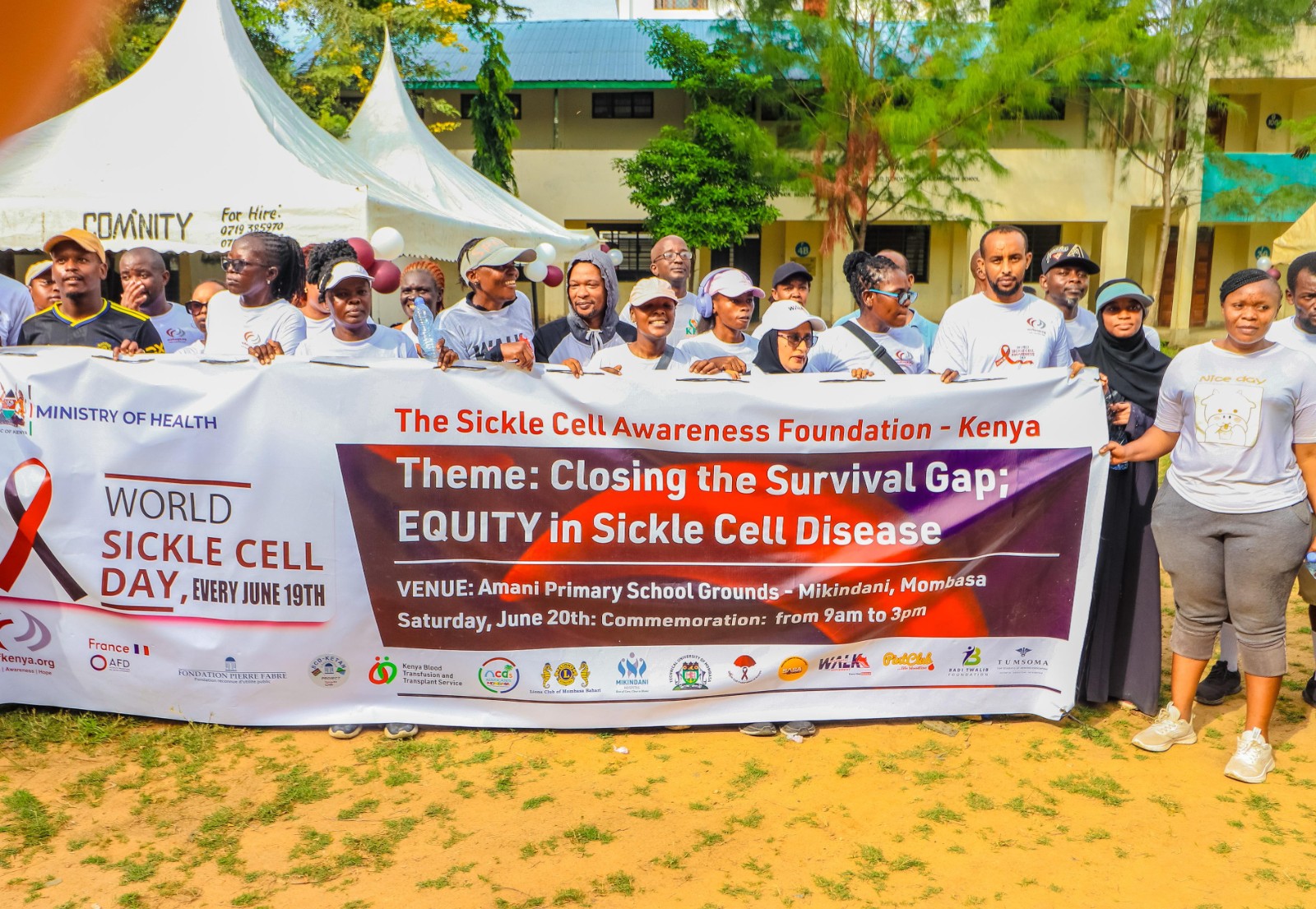
Health and medical sciences fraternity at TUM joined other Kenyans and organizations in an elaborate event that marked the annual World Sickle Cell Day on Saturday of June 20, 2026.
The students and staff of the University’s Department of Medical Laboratory Sciences in the School of Medicine and Health Sciences registered their strong presence during the day long awareness event held at Kajembe High School in Mikindani, Mombasa.
It was organized in partnership with SCAF Kenya, Mikindani Hospital, Coast General Teaching and Referral Hospital, and the Mombasa Walk Movement.
Observed under the theme “Closing the Survival Gap: Equity in Sickle Cell Disease,” the event brought together healthcare institutions, community organizations, students, healthcare professionals, and members of the public.
The event which is marked globally is meant to raise awareness, advocate for improved healthcare access, and support individuals living with sickle cell disease.
The commemoration featured a series of activities aimed at enhancing public understanding of the condition, including a community awareness walk, health education sessions, and a blood donation drive. These initiatives sought to promote early diagnosis, encourage community support, and improve the quality of life of individuals affected by sickle cell disease.
The day's activities commenced with a 16-kilometre awareness walk traversing the constituencies of Changamwe, Jomvu, Mvita, and Likoni. Participants gathered at Sabasaba in the early morning before embarking on the walk, carrying messages of hope, solidarity, and advocacy for individuals and families affected by sickle cell disease.
Students and faculty members from TUM's Department of Medical Laboratory Sciences actively participated in the exercise, demonstrating the University's commitment to advancing public health initiatives and strengthening community awareness through education, research, and outreach programmes.
Speaking during the event, the Chief Guest, Jomvu Member of Parliament Hon. Badi Twalib, emphasized the importance of early diagnosis, access to quality healthcare services, and sustained support systems for individuals living with sickle cell disease.
MP Twalib called upon stakeholders to work collaboratively in addressing the challenges faced by patients and their families.
TUM’s Chairman of Medical Sciences Department, Mr Wigina Nyarambe, also addressed the participants whereby he underscored the importance of increasing public knowledge and understanding of sickle cell disease, one of the world's most common inherited blood disorders.
Mr Wigina noted that awareness remains a critical tool in combating stigma, promoting early intervention, and improving health outcomes for affected individuals.
The don felt that collective action, continuous awareness campaigns, and strengthened community support among all stakeholders can contribute significantly to improving healthcare outcomes and ensuring equitable access to treatment and care for all individuals living with the condition.
As part of the commemoration, the Kenya Blood Transfusion and Transplant Services conducted a blood donation drive to address the ongoing need for safe and adequate blood supplies. Note that blood transfusion remains a critical component in the treatment and management of sickle cell disease and numerous other medical conditions.
The participation of TUM staff and students provided a valuable opportunity to engage directly with the community while gaining practical insights into the role of advocacy, volunteerism, and public participation in addressing health challenges. The event also reinforced the University's commitment to community service and experiential learning.
The commemoration further highlighted the importance of partnerships between institutions of higher learning, healthcare providers, government agencies, and community organizations in advancing sustainable healthcare solutions and improving the well-being of vulnerable populations.