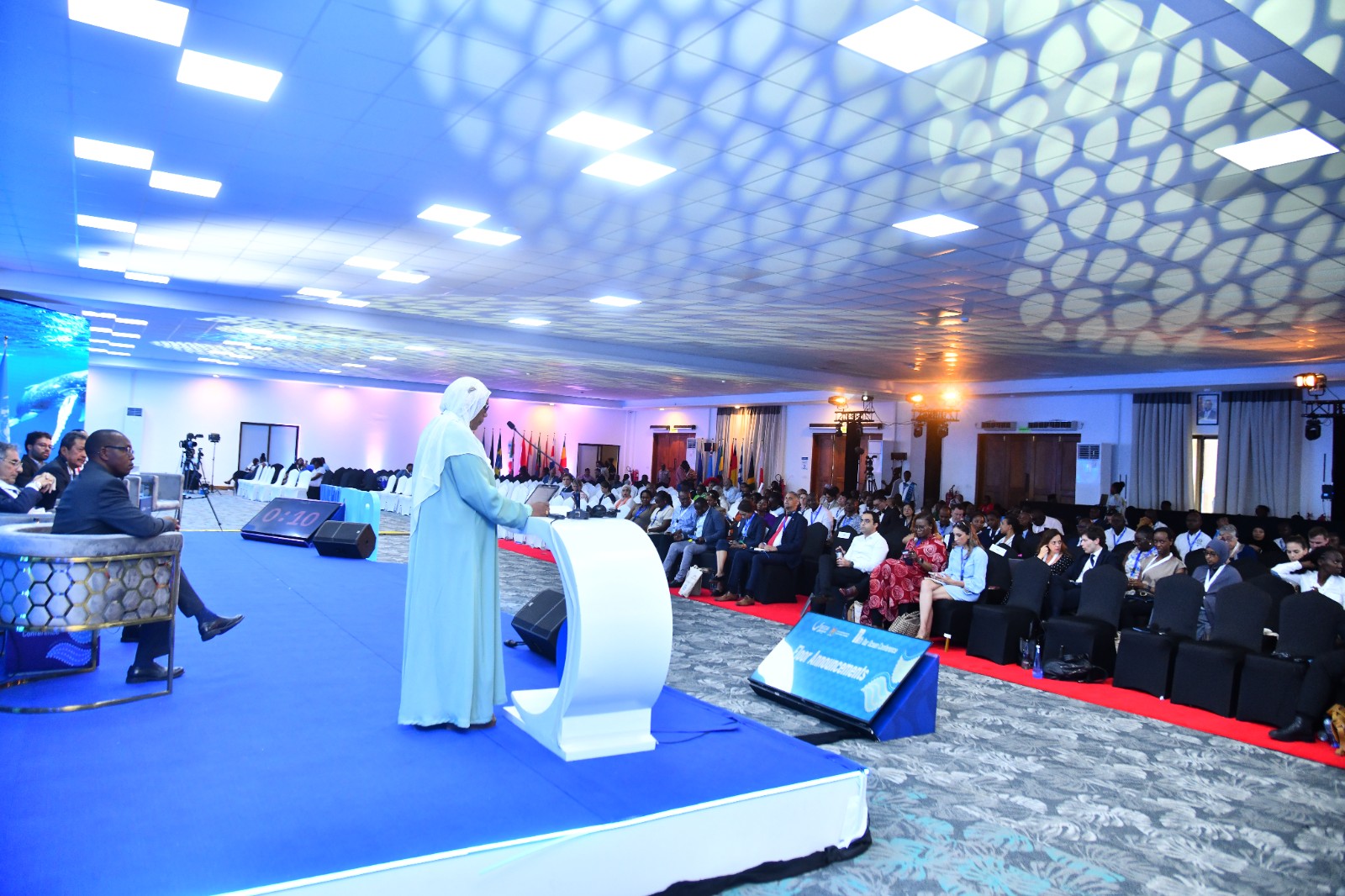
President William Ruto has made a passionate appeal to leaders and other stakeholders from different countries to actualize their policies and promises on sustainable harnessing and conserving of the oceans.
“We all need to transition from political promises into real action", Ruto said while addressing hundreds of delegates from all over world gathered in Mombasa for the 11th Our Ocean Conference (OOC).
The Kenyan president challenged nations to green their ports, drive sustainable industries, and translate conservation pledges into tangible, dignified jobs.
President William Ruto officially closed the 11th Our Ocean Conference (OOC) in Mombasa on Thursday of June 18, 2026.
The 11th Our Ocean Conference (OOC11) took place in the Kenyan coastal city from June 16 to 18, 2026 marking the first time this global summit was held on African soil.
Guided by the theme “Our Ocean, Our Heritage, Our Future” the conference focused on the essential role that the ocean plays in shaping culture, communities, and livelihoods.
The three-day event concluded with the adoption of the Mombasa Declaration to advance marine conservation and sustainable blue economies. The Mombasa Declaration was adopted by participating leaders to reinforce international commitments toward marine conservation, sustainable fisheries, and blue-green industrialization.
The conference generated over 300 new commitments valued at approximately USD $57 billion directed at ocean protection.
Deputy President Prof Kithure Kindiki had earlier officially opened the conference, and he said in his remarks that Kenya was committed to harnessing resources within its Indian Ocean territory.
He said it was a key means to empower coastal communities while protecting marine ecosystems for present and future generations. Prof. Kindiki said the Indian Ocean is critical to Kenya's economic growth and must be safeguarded from destructive activities, including the effects of climate change.
The founder of our Ocean Conference and former United States Secretary of State John Kerry challenged stakeholders to move beyond speeches and implement action related initiatives that will deliver tangible results in safeguarding the Ocean.
“Think about what the ocean does for us every single day. The Ocean produces roughly half the oxygen we breathe. It feeds more than 3 billion people. It supports the livelihoods, jobs for hundreds of millions more people and it carries approximately 80% of global trade.” Kerry explained.
While reading her commitment, Technical University of Mombasa (TUM) Vice chancellor Prof Laila Abubakar, reiterated that Kenya's coast possesses enormous Blue Economy potential in fisheries, aquaculture, maritime transport, tourism, and other ocean-based sectors.
Prof Laila said: “Over the next five years (2027–2031), the University commits to invest KES 200 million through institutional resources, strategic partnerships, and external grants to strengthen Blue Economy skills development, expand applied research and innovation, and deepen collaboration with industry to support enterprise development and job creation.
As part of this commitment, we will establish the TUM Centre for Blue Economy Enterprise Development and Innovation to drive business incubation, research commercialization, technology transfer, and support for coastal enterprises.”
“We further commit to undertake applied research and innovation projects that would support the growth of Blue Economy enterprises; train at least 5,000 youth, women, and entrepreneurs and facilitate industry placements in partnership with government, industry, development partners, and coastal communities.”
The Vice Chancellor further told the participants that TUM already has established the Institute of Maritime and Seafaring Studies (IMSS) to position TUM as a maritime hub in Kenya and East Africa at large.
Kenya successfully hosted the 3-day conference and officially handed over hosting duties for the next event to Canada.