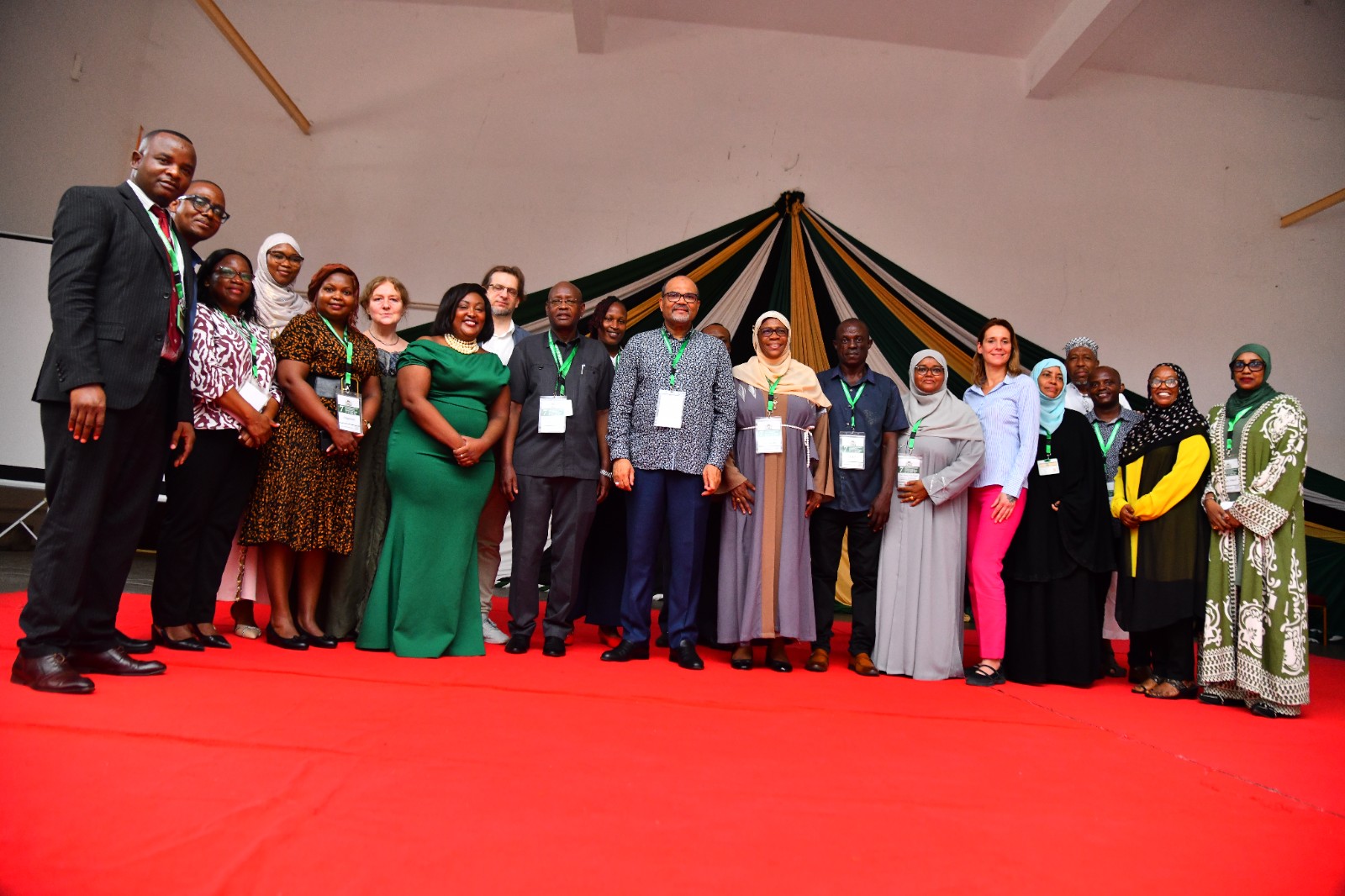
The Technical University of Mombasa has officially opened its 7th Multidisciplinary Conference and Innovation Week, bringing together scholars, policymakers, industry leaders, and students to advance research, innovation, and sustainable partnerships.
Held under the theme “Transforming Lives through Research, Innovation and Sustainable Partnerships,” the conference sets the tone for critical engagement on how knowledge can be translated into real-world impact.
Officiating the opening ceremony, Prof. Shaukat Abdulrazak emphasized the urgent need for universities to move beyond theory and deliver solutions to societal challenges through research and innovation.
He urged participants to focus on translating research into practical, impactful solutions, noting that ideas only gain real value when they are applied to address challenges facing communities and the country. He emphasized that the ultimate goal of research should be to solve real societal problems and create meaningful impact.
Prof. Shaukat further described the University as a critical think tank for Mombasa County, calling for stronger collaboration with the county government and other stakeholders. He encouraged closer linkages between academia, industry, government, and society to ensure research leads to measurable outcomes.
He highlighted the University’s growth as part of a broader national trajectory, from skills training institutions to a fully-fledged university, and called for a transition towards a more innovation-driven ecosystem. He noted that the coastal region is rich in natural resources that can be harnessed through cutting-edge research, technology, and innovation.
He also commended the introduction of the Bachelor of Nautical Sciences programme as a significant step in strengthening the blue economy, noting that it positions the University to better harness maritime opportunities along the coastal region.
Speaking on research capacity, he pointed to national efforts to strengthen postgraduate training, noting that while PhD holders currently represent only a small fraction of the population, the government is targeting an investment of between 1 to 2 percent of GDP in research and aims to produce 100 PhD holders per million population in the coming years. He emphasized that building such capacity is essential to driving innovation and long-term development.
Emphasizing the role of mindset, he called for the development of more thinkers, noting that the future of Kenya and Africa will be shaped by what is created through knowledge, innovation, and partnerships. He urged stakeholders to believe in their capacity to innovate and drive change.
The Chairman of Council, Dr. Fredrick Zacharia Argwenge Odede, emphasized the importance of strengthening research in humanities, culture, and the arts within the University’s broader mandate, noting their role in shaping inclusive development.
He underscored the need to better harness cultural and social resources for improved livelihoods and their preservation for future generations.
He further highlighted the importance of interdisciplinary collaboration, stating that research should be approached holistically rather than in a linear manner. In this regard, he noted: “It is of great importance today to have the interactions between various disciplines and that research is seen in a holistic view rather than a straight line. Hence, the multidisciplinary approach should come out very clearly and should help in generating more research funds and attracting more participants who can ultimately help promote the livelihoods of the communities around us.”
In her address, the Vice Chancellor, Prof. Laila Abubakar, reflected on the broader purpose of the conference, emphasizing the University’s role in shaping solutions that extend beyond academia.
She noted that the University is increasingly aligning its teaching, research, and partnerships with real societal needs, ensuring that innovation remains responsive and human-centred. In this regard, she pointed to the Afya Moja Project under the Institutional University Cooperation (IUC) Programme as a key example of how strategic partnerships are strengthening both research capacity and practical impact.
“Through Afya Moja, the University is strengthening its research and innovation ecosystem through the establishment of a Technology Transfer Office, innovation spaces, and expanded postgraduate training through scholarships and joint supervision. It is also enhancing applied research capacity across health sciences, marine and environmental systems, engineering, and digital technologies, positioning TUM as a growing regional hub for innovation, knowledge production, and sustainable development,” she noted.
Reinforcing the call for more impactful scholarship, the Deputy Vice Chancellor, Academics, Research and Extension, Prof. Peter Gichangi, echoed sentiments on the need to move beyond publication metrics and toward real societal engagement.
He stated that while the “publish or perish” adage remains important, researchers must think beyond it. He emphasized the importance of meaningful engagement with the community, noting that researchers need to go down to the level of the common mwananchi, who can also contribute ideas toward practical solutions.
Welcoming participants, Prof. Rahma Udu acknowledged partners and stakeholders for their support in organizing the conference.
“This conference serves as a vital platform for interdisciplinary dialogue and collaboration. The presentations and discussions over the next few days will highlight groundbreaking research across key thematic areas, emphasizing our commitment to innovative solutions in these domains,” she said.
Adding a reflective, human-centred dimension to the discussions, Dr Andrzej Cichoki from the University of Silesia in Katowice, Poland,challenged participants to rethink the role of universities in an increasingly technological world. While acknowledging the rapid rise of artificial intelligence and digital tools, he cautioned against losing sight of the human element.
He observed that while modern advancements demonstrate the scale of human possibility, they also call for a deeper sense of responsibility. He argued that universities must go beyond simply transmitting information or technical skills. Instead, they should cultivate meaningful dialogue, critical thinking, and human connection, elements that cannot be replicated by algorithms or automated systems.
One of the attendees, Michael Maluki, a roads engineer from Makueni County, expressed enthusiasm for the conference, noting that he will be presenting a paper titled “Green Roads for Water.” He explained that his work focuses on developing transport systems that are climate-resilient and directly improve community livelihoods.
He said: “We are shifting from traditional road design to more integrated approaches that go beyond transport functionality to incorporate road water harvesting systems, aimed at enhancing resilience and supporting communities. I am also looking forward to networking and collaborating with key partners and stakeholders during the conference.”
Across the opening addresses, a clear and consistent message emerged: that the future of higher education lies not only in knowledge creation, but in collaboration, interdisciplinary engagement, and the ability to translate ideas into real impact.
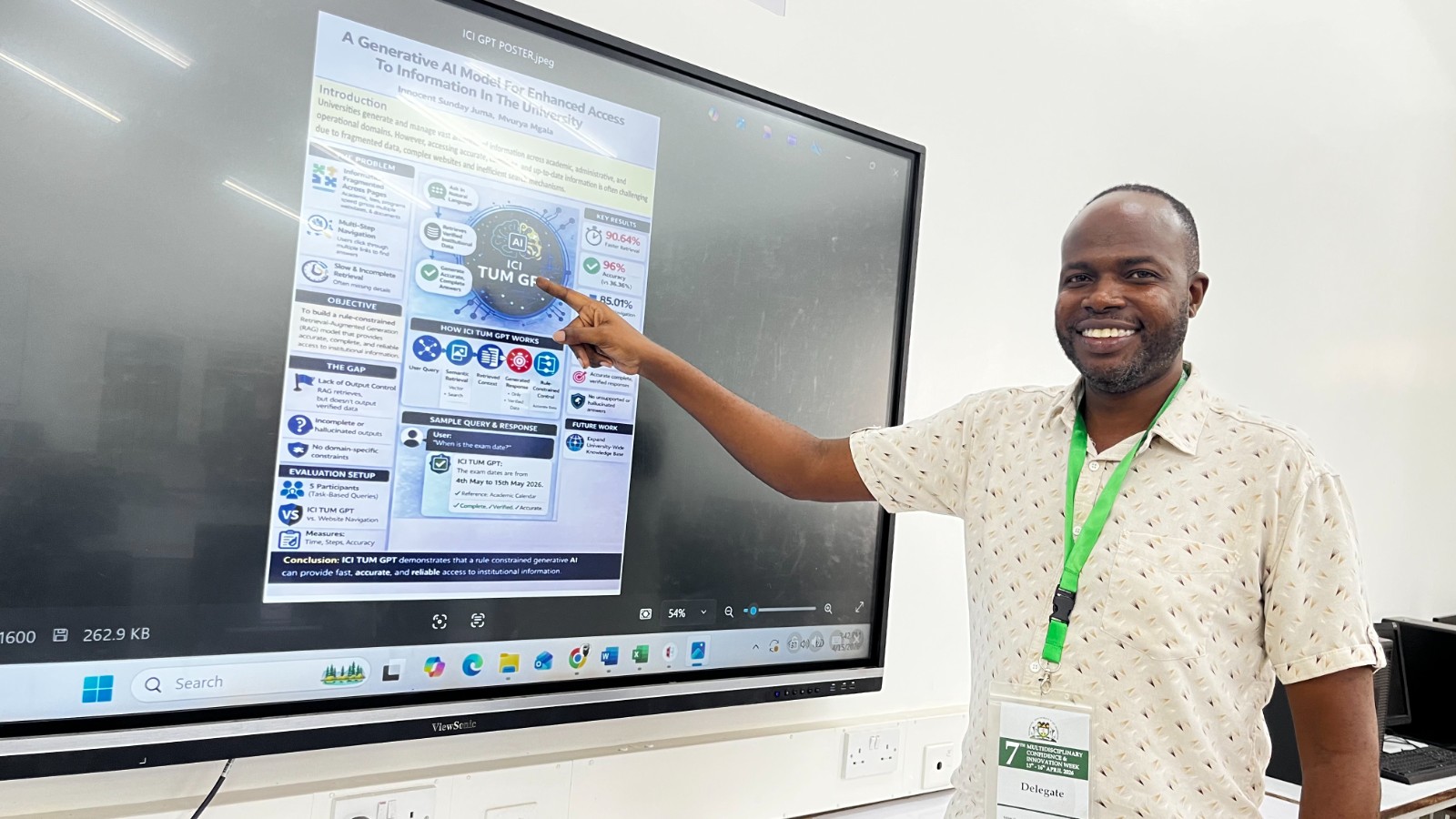
As the conference continues until the 16th of April, participants will engage in presentations, exhibitions, and hackathons aimed at transforming research into actionable solutions for society.