By: Lubnah Abdulhalim & Abdulaziz Abeid
At the Technical University of Mombasa, the pursuit of knowledge and innovation is driven by individuals whose work extends far beyond lecture halls and laboratories.
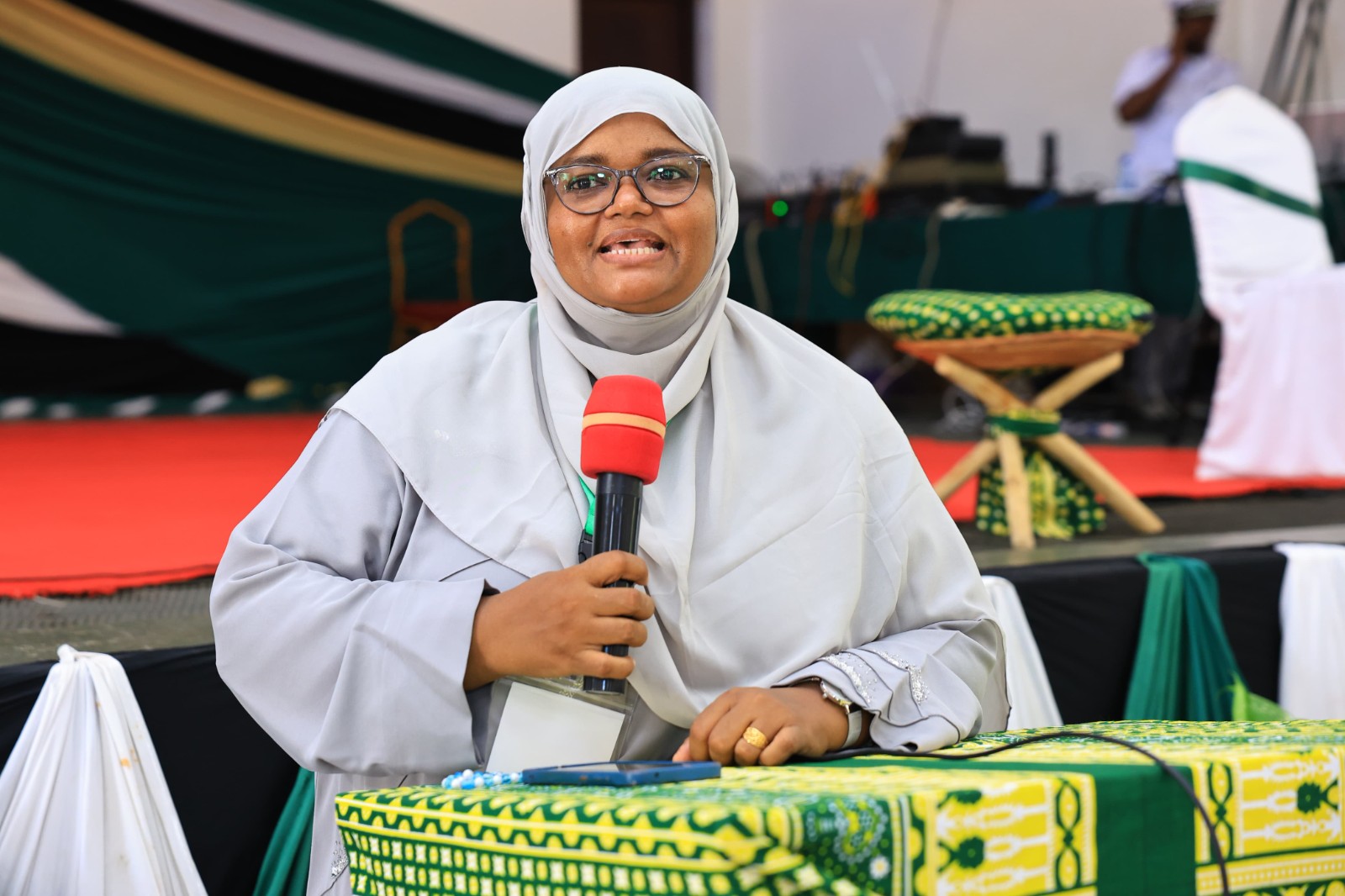
Among these remarkable scholars is Professor Rahma Udu Mohdhar Yusuf, the Registrar for Partnerships, Research and Innovation (PRI), and a scientist whose career spans innovative malaria research, academic mentorship, and institutional leadership.
A specialist in medical biochemistry, Prof. Rahma has built a reputation as both a researcher and an academic leader committed to advancing science while nurturing the next generation of researchers.
Prof. Rahma’s academic journey began with a strong interest in the sciences, particularly. She pursued her Bachelor of Science degree in Biochemistry, followed by a Master of Science in Biochemistry, and later a Doctor of Philosophy (PhD) in Biochemistry, where she specialised in medical biochemistry.
However, her professional career began at the Kenya Medical Research Institute (KEMRI), the country’s leading research institution. She joined the institute as an Assistant Research Officer and was assigned to the Malaria Research Laboratory, where she worked on one of the most persistent public health challenges affecting millions of people across Africa.
“KEMRI played a very important role in shaping my career as a scientist,” she noted. “It is where I gained valuable experience working in research laboratories and conducting scientific studies that address health challenges.”
Recognising her potential as a promising young scientist, KEMRI sponsored her postgraduate studies, allowing her to pursue both her master’s and doctoral degrees while continuing her research work.
During her PhD studies, Prof. Rahma conducted extensive research on the effectiveness of antimalarial drugs and the growing global concern over drug resistance.
One of her major studies focused on Artemether-Lumefantrine (AL), one of the most widely used malaria treatments.
Her findings revealed early indications that the malaria parasite was gradually developing resistance to the drug, a discovery that raised important questions for public health planning and malaria treatment policies.
“At the time, Artemether-Lumefantrine was the most widely used treatment for malaria. Our research showed that there were early signals suggesting that resistance could eventually emerge,” she explains.
Through her research, she proposed Dihydroartemisinin-Piperaquine as a potential alternative treatment, particularly in regions where resistance to Artemether-Lumefantrine could emerge.
Her work contributed valuable insights into malaria treatment strategies. Today, as resistance to certain malaria drugs continues to be reported in different parts of the world, her research stands as an early warning that highlights the need for continuous monitoring and innovation in malaria control.
After completing her doctoral studies, Prof. Rahma transitioned into academia, joining Pwani University as a lecturer in the Department of Biochemistry and Biotechnology.
For four years, she taught undergraduate courses while supervising students in laboratory research. Her goal was to share the hands-on research experience she had gained and inspire young scientists to pursue careers in biomedical research.
“I felt it was important to pass on the practical knowledge and research skills I had acquired to the next generation of scientists,” she explained.
Her dedication to teaching and mentorship later led her to join the Technical University of Mombasa in 2016 as a Senior Lecturer.
Through years of academic service, research, and mentorship, she steadily rose through the academic ranks and is now an Associate Professor of Biochemistry.
At the university, she taught biochemistry courses and supervised numerous postgraduate students pursuing master’s and doctoral studies in laboratory-based research. In 2017, Prof. Udu was appointed as the chair of the Department of Pure and Applied Science in the School of Applied and Health Science (SoAHS). She was elected Dean of SoAHS in 2018 and served in this role for five years. She was the second dean of the school after the university received a charter in 2013.
Today, Prof. Rahma serves as the Registrar for Partnerships, Research and Innovation (PRI) at the Technical University of Mombasa, where she plays a strategic leadership role in strengthening the university’s research ecosystem.
Under her leadership, the university has significantly increased research engagement across faculties while expanding partnerships with international institutions and research organisations.
“We encourage staff to apply for grants and support them in identifying research calls that align with their areas of interest,” she stated.
One of her key initiatives is spearheading the establishment of a Technology Transfer Office (TTO) at the university. The office aims to transform academic research into practical innovations that can benefit society.
The initiative seeks to bridge the gap between academic research and industry while creating opportunities for innovation, entrepreneurship, and employment for young graduates.
Beyond research and partnerships, the PRI office also serves as a bridge between the university and the wider community.
“Through collaborations with non-governmental organisations, community-based organisations, and local institutions, the university has implemented a number of outreach programmes, including the university working with NGOs, community-based organizations, and local institutions to implement outreach initiatives, including Tree planting campaigns, Health awareness programmes, Maritime and engineering exhibitions,” she said.
Prof Rahma noted that such engagements allow the university to contribute directly to societal development while sharing scientific knowledge with the public.
“These engagements allow the university to give back to society while sharing knowledge and expertise,” Prof. Rahma said.
One of the most significant milestones under Prof. Rahma’s leadership is the successful acquisition of a major international research grant funded by the Belgian government through VLIR-UOS.
The highly competitive grant will run for ten years and is expected to significantly transform research capacity and institutional transformation, to extend largely to the community at the Technical University of Mombasa.
In addition, previously, Prof. Rahma has secured funding from the National Research Fund, amounting to KSh 13.6 million. Through this funding, the university has been able to acquire modern laboratory equipment to support scientific research, train three master’s students, and supervise a PhD student in advanced research. These initiatives are helping to strengthen the university’s capacity to conduct high-quality scientific research.
For Prof. Rahma, the greatest reward of her career lies not only in research discoveries but also in mentoring future scientists.
Through her teaching, research supervision, and leadership, she continues to inspire students to pursue scientific careers that help solve global challenges.
At the Technical University of Mombasa, her work continues to expand research opportunities, strengthen global collaborations, and ensure that innovation remains at the heart of the university’s mission.
NUMBER OF PUBLICATIONS- 45 papers
EMAIL: rahmaudu@tum.ac.ke