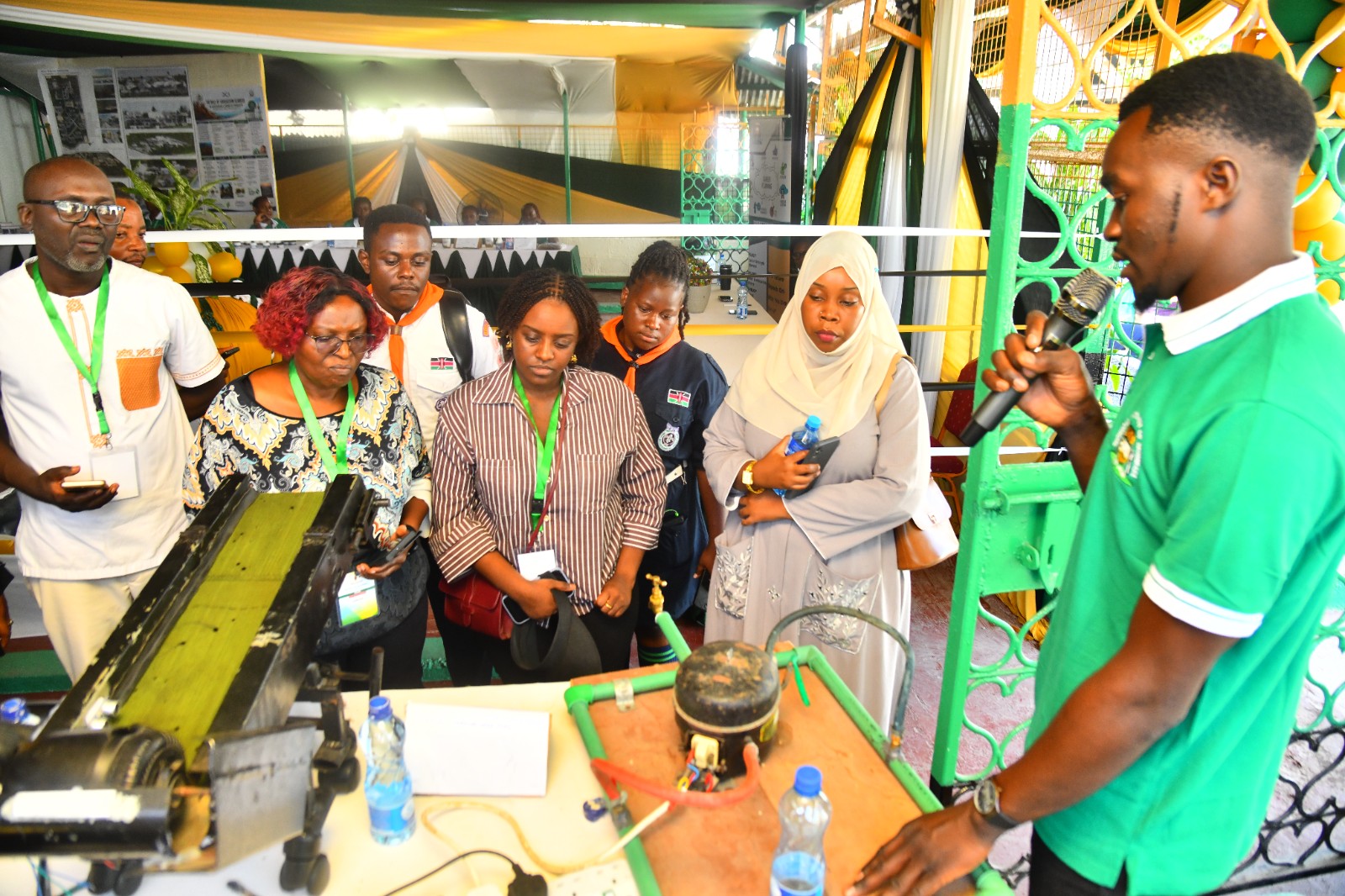
Student innovators from the Technical University of Mombasa (TUM) are showcasing a diverse range of innovations at the 2026 Mombasa International Show, running from September 2 to 6, 2026, at the Jomo Kenyatta Showground in Mkomani, Mombasa.
Organized by the Agricultural Society of Kenya (ASK), this year's show is being held under the theme, “Promoting Climate Smart Agriculture and Trade Initiatives for Sustainable Economic Growth.”
TUM is participating in five competition categories: Education and Research (Stand that Best Interprets the Show Theme), Best University Stand, Best Stand in Research and Development (Education), Best Stand in Research and Development (Non-Education), and Best Innovation and Invention.
The University's participation brings together student innovations from disciplines including Medical Engineering, Marine Engineering, Architecture and Food Science, with several projects demonstrating how research and technology can contribute to sustainability, efficient resource use and improved livelihoods.
Among the innovations presented to the judges was a Phototherapy Safety Interlock System developed by Medical Engineering student Pales Irene. The system is designed to enhance the safety of phototherapy treatment for premature babies and especially newborns suffering from jaundice, addressing the need for safer and more reliable healthcare technologies.
The theme's emphasis on climate-smart solutions is reflected in Saida Omar's solar-powered boat, developed in Marine Engineering. The innovation uses solar energy as an alternative to conventional fuel-powered vessels, with the potential to reduce emissions and operating costs while supporting activities such as aquaculture and agriculture along rivers and lakes.
Sustainability is also at the centre of the architectural concepts on display. John Githinji, an Architecture student, presented a Contemporary Swahili Resort Complex proposed for Kwale. The design combines community spaces with income-generating facilities, including cottages, restaurants and indoor and outdoor recreational areas. It incorporates traditional Swahili architectural features such as mashrabiya screens, courtyards and green spaces to encourage natural airflow and reduce heat.
In Food Science, Whitney Faraja presented a moringa and sweet potato-enriched mandazi. The innovation seeks to improve the nutritional value and shelf life of the product by incorporating antioxidant-rich moringa and sweet potato, whose water-binding properties help improve texture and reduce spoilage.
Together, the innovations demonstrate how TUM students are applying knowledge from different disciplines to develop practical responses to challenges in healthcare, climate sustainability, food technology, architecture and the Blue Economy.
As the judging continues, TUM's participation provides students with an opportunity to put their ideas before industry experts and the wider public while demonstrating the role of research and innovation in advancing sustainable development and economic growth.