By: Mariam Kidhangi & Lubnah Abdulhalim
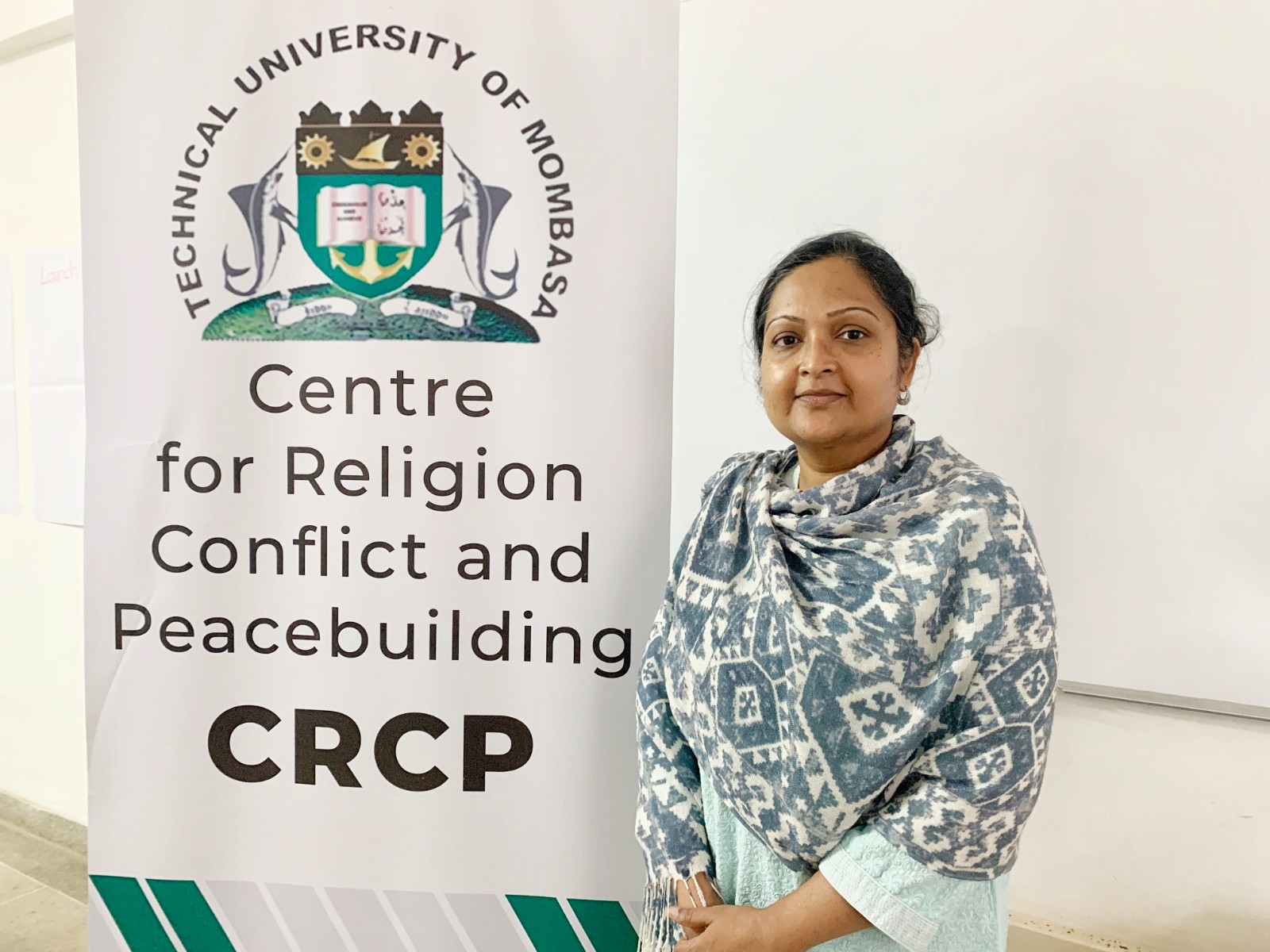
Dr Fatima Azmiya Badurdeen, a Senior Lecturer at the Technical University of Mombasa (TUM), has dedicated her academic career to understanding conflict, radicalisation and violent extremism, and their far-reaching implications for communities, security and peace.
Her interest in peace and conflict was shaped early in life. Growing up during Sri Lanka’s 30-year civil war gave her first-hand exposure to the realities of conflict and its impact on communities. At 17, she became involved in the Sri Lankan Youth Parliament, where she worked to bring together young people from the country’s north and south despite deep ethnic and religious divisions. This early engagement in peacebuilding eventually developed into youth activism across Sri Lanka and South Asia and, later, into an academic career focused on understanding and addressing conflict.
When Dr Fatima joined TUM in 2012, her research increasingly turned towards radicalisation and violent extremism. Her interactions with young people in Mombasa, including students affected by pathways into violence, prompted her to explore the factors that drive radicalisation and the role communities can play in preventing violent extremism.
This work became the foundation for her doctoral and postdoctoral research and has since developed into a broader body of research on conflict, security and peacebuilding.
At TUM, Dr Fatima is also the founder of the Centre for Religion, Conflict and Peacebuilding (CRCP), a multidisciplinary platform that advances research, education and engagement on conflict, religion and peace. She also played a key role in designing and establishing the Bachelor of Arts in Conflict and Security programme at the university, contributing to the development of academic capacity in an area of growing importance in the region.
With more than 55 research papers to her name, her research extends beyond academic publications to policy and community engagement. She has worked with governments, non-governmental organisations and donor networks on issues including preventing and countering violent extremism and has contributed to efforts to strengthen county action plans in this area.
A significant strand of her work examines how communities are represented in conversations around violent extremism. Dr Fatima advocates for approaches that move beyond narrow narratives that associate Muslim communities primarily with extremism, highlighting their agency and contribution to peacebuilding. Her research also brings gender into conversations on conflict and security, areas where women's experiences and contributions have historically received insufficient attention.
Her research extends across Kenya, East Africa and South Asia, allowing her to engage with diverse contexts while building networks with researchers, practitioners, governments and civil society organisations. Through this work, she has also demonstrated how research can move beyond the academic sphere to inform policy, influence perceptions and strengthen community-led approaches to peace and security.
For Dr Fatima, meaningful research begins with a genuine interest in the questions being explored rather than following academic trends. Her advice to colleagues and students is simple: “Go with what you are good at, not what is considered trendy.”
Her own career reflects this philosophy. Violent extremism was not an easy or fashionable area of research when she began working on it. It was a complex and sensitive subject that required persistence, community engagement and the willingness to build trust. As a foreign researcher working in Kenya, establishing that trust took time, but sustained engagement and the quality of her work helped establish strong relationships with communities and organisations.
Today, Dr Fatima continues to pursue research that connects scholarship with real-world challenges. For her, the value of research lies not only in generating knowledge, but in its ability to influence policy, challenge perceptions and contribute to communities where people can see one another not as enemies, but as partners in building peace.
Her journey demonstrates the role researchers can play in addressing some of society's most complex challenges, while showing how lived experience, academic inquiry and community engagement can come together to create research with lasting impact.
Research publications: 55+ papers
Email: fazmiya@tum.ac.ke