65 TUM Medical Students take Hippocratic Oath at White Coat Ceremony
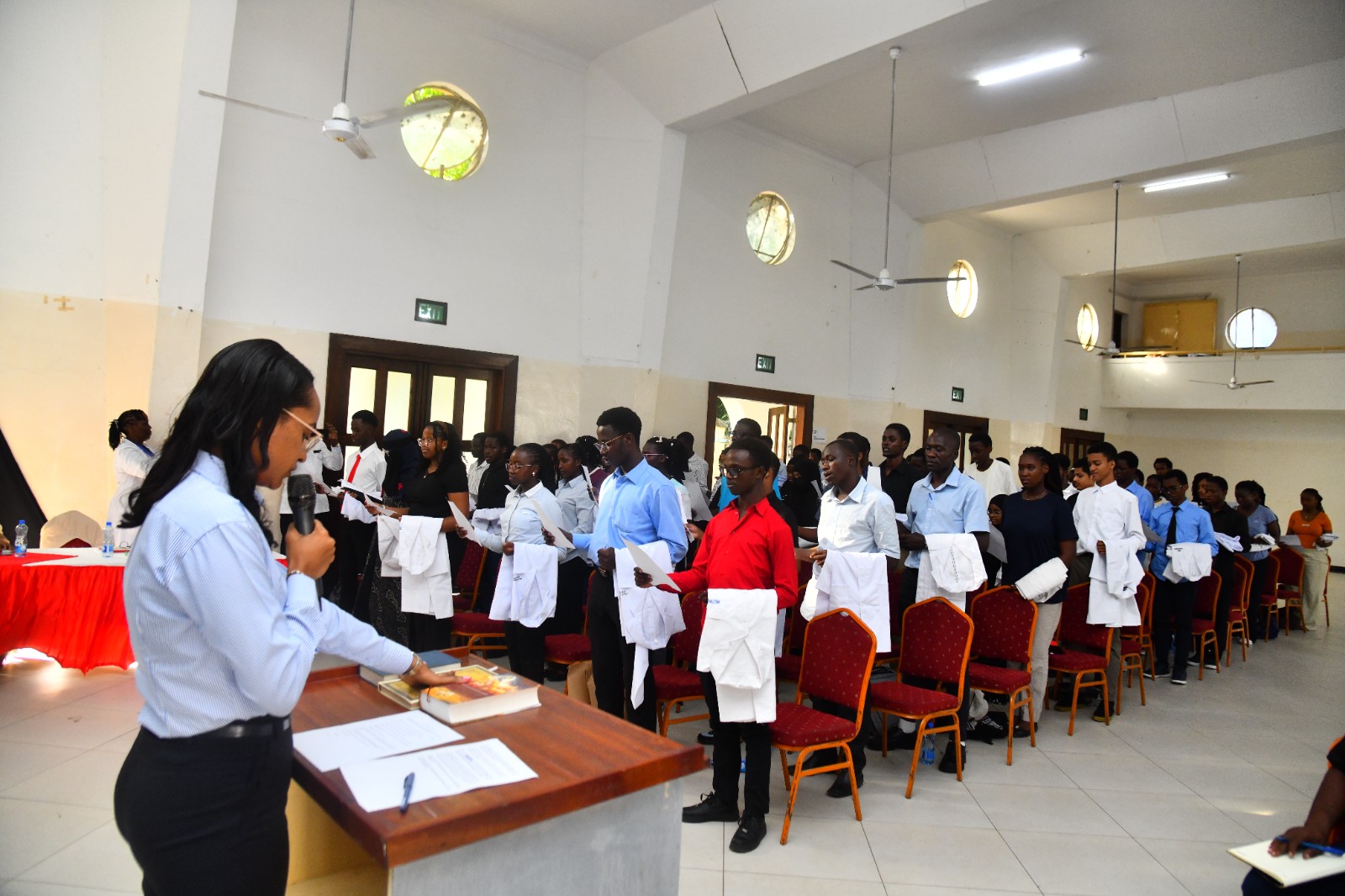
Sixty-five (65) medical students at the Technical University of Mombasa (TUM) took the Hippocratic Oath today, marking a significant milestone in their journey toward becoming medical professionals.
The students took the oath during a White Coat Ceremony held at the University, signalling their transition into the clinical phase of their medical training. Ms Nahrien June Shajahan from the Legal Department administered the oath and reminded the students of the ethical and professional responsibilities that come with joining the medical profession.
The ceremony was graced by the Belgian Ambassador to Kenya, H.E. Tom Neijens, who urged the students to uphold professionalism and integrity in discharging their duties.
Ambassador Neijens challenged the future doctors to put humanity and kindness at the centre of their medical practice, noting that healthcare professionals interact with people during some of the most vulnerable moments of their lives.
“Please embrace ubuntu in this profession and you will go very far. When I was young, I used to admire smart leaders and politicians. After growing up, I now admire kind people. Please be kind,” Neijens said.
He encouraged the students to remember that being a doctor goes beyond possessing medical knowledge and technical skills, emphasising the importance of compassion, respect and human dignity in patient care.
The Vice Chancellor, Prof. Laila Abubakar, told the students that the white coat they received was much more than a uniform, describing it as a symbol of the trust society places in those who choose the medical profession.
“The white coat is a symbol of the trust, It represents knowledge, professionalism, responsibility and, above all, service to humanity,” Prof. Laila said.
She challenged the students to look beyond existing knowledge and continuously ask what could be done differently and better in addressing healthcare challenges.
“Healthcare is changing rapidly, and the doctors of tomorrow must not only be practitioners, but also innovators and problem-solvers,” the VC said.
She urged the students to embrace innovation, technology, research and creative thinking as important components of their professional journey.
“At TUM, we believe that education must prepare our students not simply to respond to existing challenges, but to develop solutions to emerging ones. I therefore challenge you to embrace innovation, technology, research and creative thinking as important parts of your professional journey,” she said.
Prof. Laila noted that innovation in medicine is not limited to sophisticated technology, but can also involve new ways of delivering healthcare, improving access to services for underserved communities, developing research-based treatment approaches, or finding simple solutions that improve patients’ experiences.
“Whatever form it takes, innovation must remain grounded in ethics, compassion and the dignity of the patient,” Prof Laila concluded.
The Dean, School of Medicine and Health Sciences, Prof. Emily Rogena, said the White Coat Ceremony was established in 1989 at the University of Chicago and has since become an important tradition in medical education.
Prof. Rogena urged the students to take their professional responsibilities seriously and use their knowledge and skills to serve humanity.
She noted that TUM had invested in appropriate equipment and qualified human resources to provide students with quality medical training and prepare them for the demands of the profession.
Prof. Rogena described the white coat as the “epitome of purity in the medical profession,” reminding the students that wearing it comes with the responsibility to uphold the values and ethical standards of medicine.
The ceremony also witnessed the launch of the Technical University of Mombasa Students of Medical Association (TUMSOMA), a student association established to provide a platform through which medical students can address key issues affecting them and support one another throughout their academic journey.
The association is expected to enhance student engagement, representation and collaboration while providing a platform for students to navigate academic and professional challenges.
The White Coat Ceremony and administration of the Hippocratic Oath marked an important milestone for the 65 students as they begin a new phase of their medical education.
The ceremony served as a reminder that the medical profession requires not only knowledge and technical competence, but also integrity, compassion, innovation and an unwavering commitment to the service and dignity of humanity.