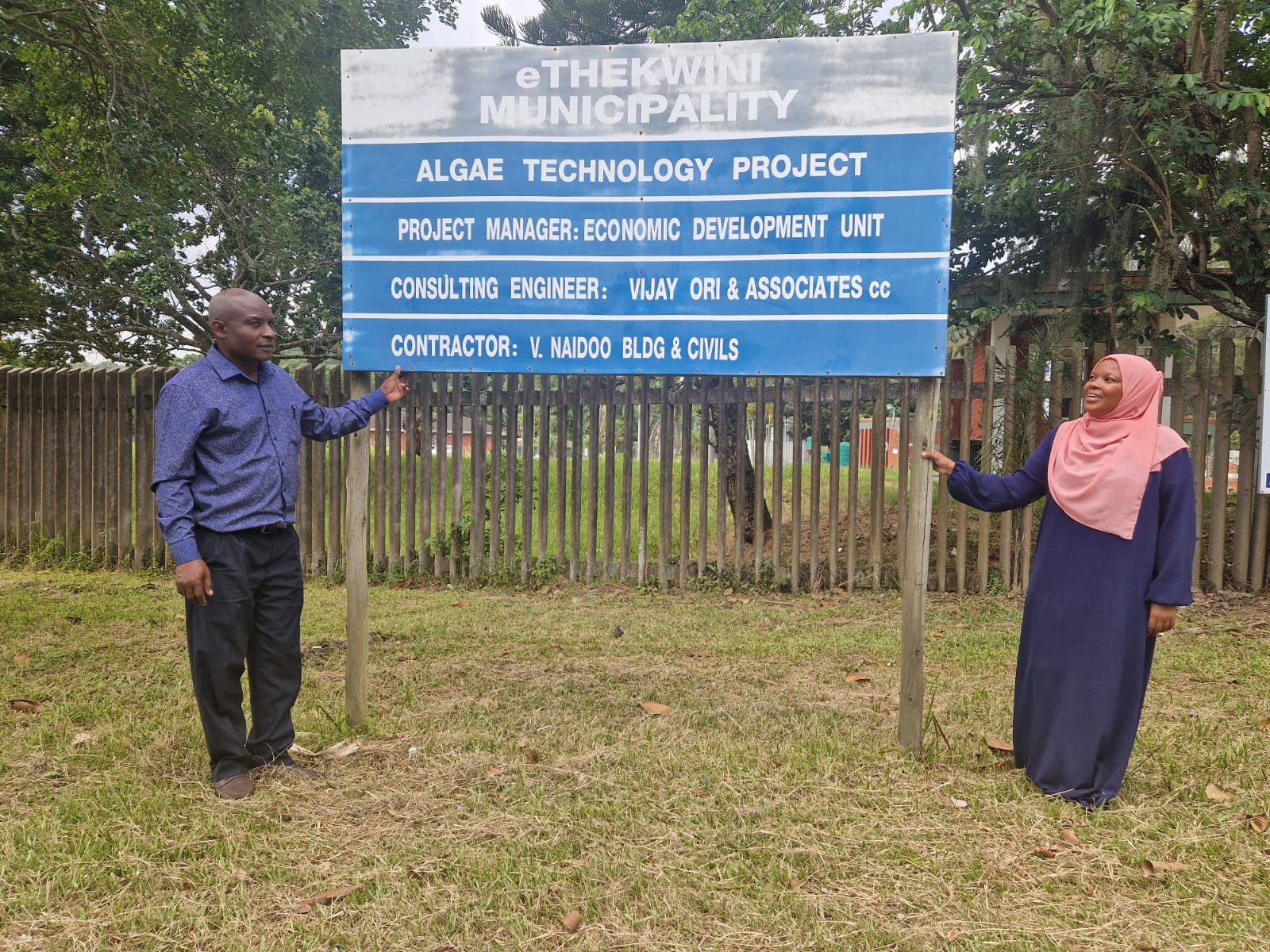
From January 19th to 23rd, 2026, staff from the Technical University of Mombasa (TUM) participated in a capacity-building training at the Institute of Water and Wastewater Technology (IWWT), Durban University of Technology (DUT), South Africa. The training supported skills development relevant to the SWATIA project – Sustainable Wastewater Treatment Using Algal-Bacterial Consortia for Enhanced Resilience to Climate Change in Africa. The SWATIA project is jointly implemented by the Durban University of Technology, the Technical University of Mombasa, and the University of Tsukuba in Japan.
The TUM delegation comprised Dr Mariam Maku Swaleh, Assistant Registrar (Research & Grants) and a marine and environmental chemist, and Mr Kennedy Litunda, a Laboratory Technologist and MSc student at TUM, whose work supports research and postgraduate activities linked to the SWATIA project.
The training took place at DUT’s Institute of Water and Wastewater Technology (IWWT), under the leadership of Prof. Faizal Bux, Director of the Institute. Coordination of the training was led by Prof. Ismail Rawat together with his research and technical team, and involved focused laboratory- and field-based capacity-building activities. These covered key techniques relevant to algal-based wastewater treatment, including microalgae cultivation, algal–bacterial consortia, wastewater treatment processes, raceway pond systems, photobioreactors, chlorophyll analysis, and advanced monitoring tools such as PAM fluorometry. The programme also included a technical site visit to the Kingsburgh wastewater treatment facilities, providing exposure to operational systems and applied nature-based treatment approaches.
A key outcome of the visit was strengthened technical capacity and institutional research readiness. For Mr Litunda, the training enhanced practical laboratory skills and applied experience that directly support laboratory and research activities at TUM. For TUM, the engagement contributed to improved technical capacity, knowledge exchange, and preparedness to implement SWATIA research activities in collaboration with partner institutions.
This training aligns with TUM’s strategic priorities in postgraduate capacity building, international collaboration, and climate-responsive research, and supports the University’s broader contribution to sustainable and climate-resilient wastewater solutions in Africa.
TUM acknowledges the hosting and technical support provided by the Durban University of Technology and its Institute of Water and Wastewater Technology, as well as the support of the AJ-CORE programme and its funding partners.