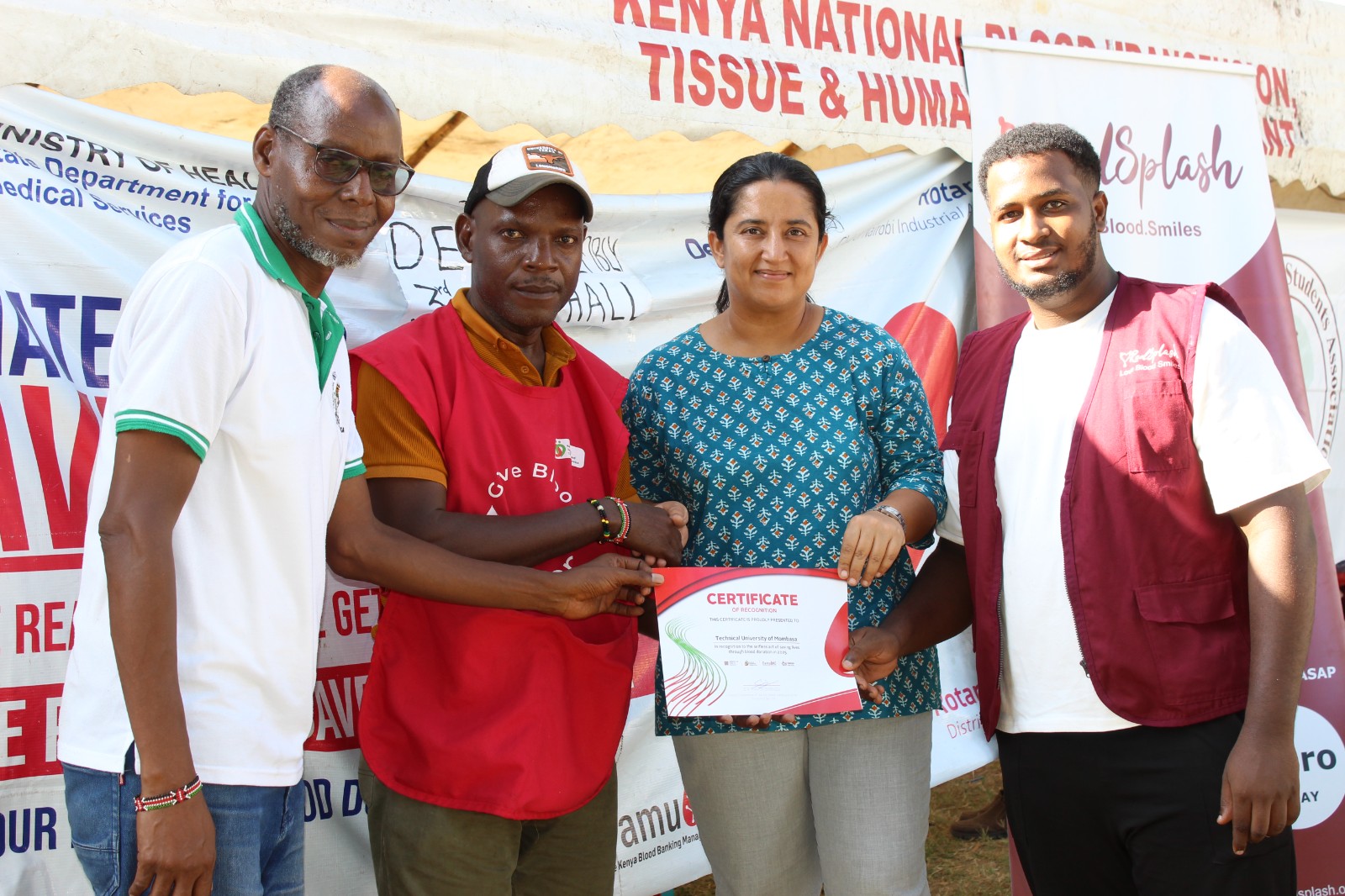
From the 3rd to the 5th of December, the Technical University of Mombasa (TUM), through the School of Medicine and Health Sciences, held a three-day blood donation drive at the University’s Main Campus. The initiative was organized in partnership with the Mombasa County Government, the Blood Transfusion Service Centre, Redsplash, St. John’s Ambulance, and several other dedicated stakeholders. The drive aimed to support the increasing demand for safe blood within Mombasa County and to raise awareness on the importance of regular blood donation.
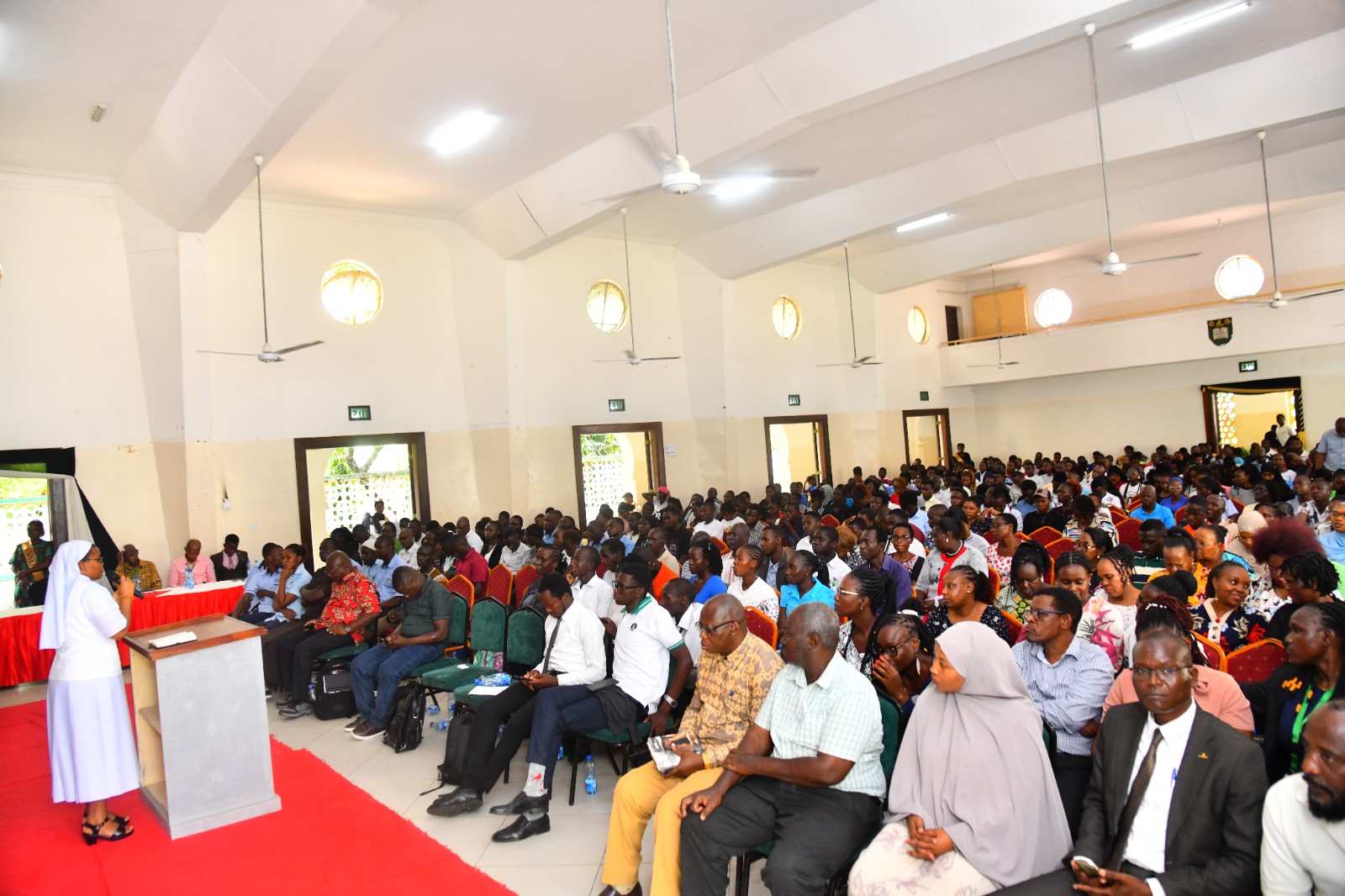
The event was officially launched on Wednesday morning, with the Dean of the School of Medicine and Health Sciences, Prof. Emily Rogena, emphasizing the life-saving power of blood donation.
“Blood is life. Blood is the only medicine that is freely given by us to others in the community. We ought to support this cause because we do not know when we or our brothers and sisters will require blood,” she remarked.
Prof. Rogena explained that a major demand for blood arises during childbirth, noting that up to 6,000 women in Kenya die during delivery due to lack of blood. She further highlighted frequent emergencies such as road accidents and malaria cases, which also increase the demand for blood.
“As such, we at TUM are dedicated to supporting the County in this cause. We intend to make this a long-term project where we frequently partner on the same. Last year, TUM donated 262 packs of blood. We encourage people to keep donating. Donate a pack to save a life!”
The Mombasa County Blood Transfusion Coordinator, Mr. Keith Ziro, reiterated the urgent need for increased voluntary blood donors.
“The County needs around 2,000 units of blood each month, yet we currently receive only about 1,300 units. One unit of blood can save up to three lives. From it, we can separate cells for one patient, collect platelets for another, and extract plasma for yet another individual, all from a single unit,” he explained.
Mr. Ziro also addressed a common misconception regarding the sale of blood in hospitals, clarifying that blood is donated and issued to patients free of charge. Any fees incurred are related to hospital-specific procedures such as rescreening, compatibility testing, or laboratory services. He urged members of the public to report any irregularities to Coast General Hospital.
By the end of the three-day campaign, the TUM community had collectively donated 177 pints of blood, making a significant contribution toward bridging the county’s monthly blood deficit.
The Chairman of the Medical Sciences Department, Mr. Ronald Nyarambe Wigina, expressed deep appreciation to the donors who turned up in large numbers.
“I urge the TUM community to keep donating because the World Health Organization recommends 100 percent voluntary blood donations. We must support such drives, especially for patients with sickle cell disease, cancer, and those undergoing dialysis who depend heavily on donated blood,” he noted. He further encouraged students and young adults to know their blood groups and cultivate a spirit of altruism.
Mr. Wigina also announced that the Medical Engineering Department emerged as the best-performing department in terms of donor turnout, accounting for approximately 18.4 percent of the total donors. The department will receive a shield of recognition for its exemplary participation.
The blood donation drive was not only a success but also a strong demonstration of TUM’s commitment to community welfare and public health. With continued collaboration and sustained awareness, the University hopes to make regular blood donation an embedded culture within the institution.