12 Nov 2026 LUBNAH ABDULHALIM
TUM Participates in 6th KLISC International Conference on sustainable library solutions
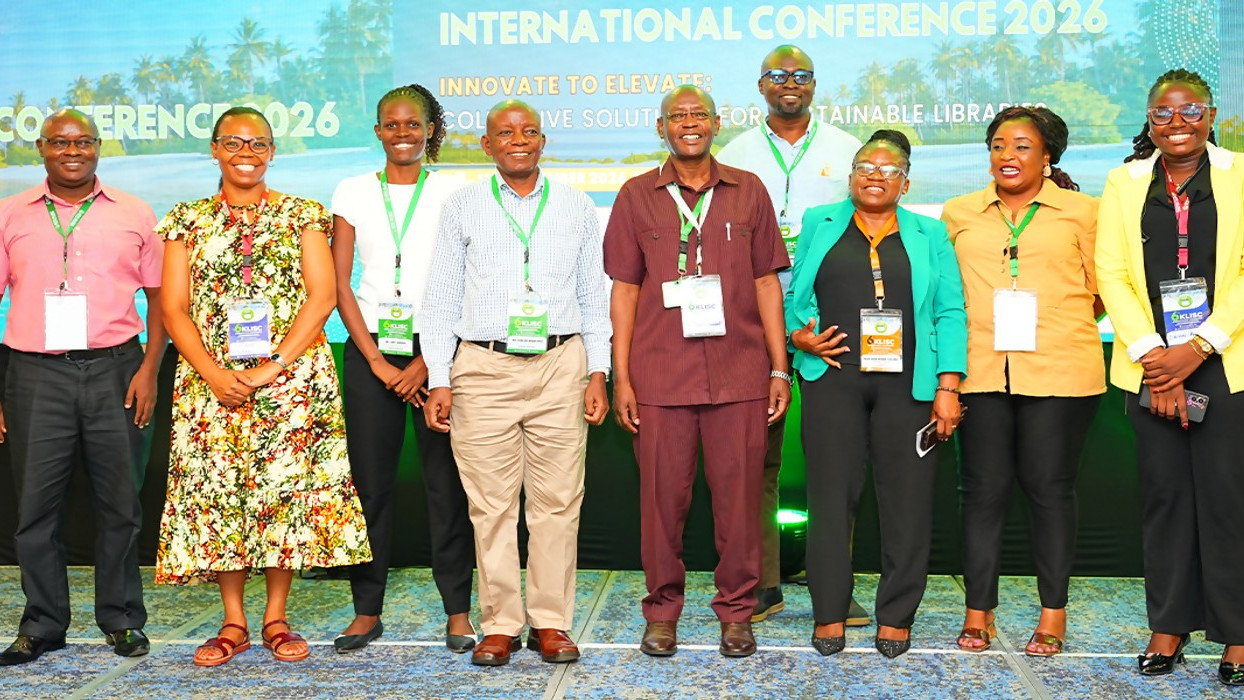
The Technical University of Mombasa (TUM) is participating in the 6th Kenya Libraries and Information Services Consortium (KLISC) International Conference, bringing together librarians, researchers, academics, publishers and other stakeholders to discuss the future of library and information services.
Held from 10 to 14 November 2026 at PrideInn Paradise Beach Resort in Mombasa, the conference is themed “Innovate to Elevate: Collective Solutions for Sustainable Libraries.” It has attracted delegates from diverse institutions and sectors, including universities, Technical and Vocational Education and Training (TVET) institutions, government bodies, research centres and public libraries.
In his welcome remarks, KLISC Governing Board Chairperson, Prof. Arnold Mwanzu, highlighted the consortium's role in facilitating collective subscriptions to electronic information resources since its establishment in 2003, enabling member institutions to access scholarly resources at subsidised rates. He emphasised the importance of collaboration in addressing the rising costs of information resources and the changing demands of the library profession. He also highlighted a recent development concerning the Parliamentary Library, noting that a proposal to recognise it as an additional legal-deposit institution for preserving digital collections had been passed.
Speaking on behalf of the conference's Chief Guest, Principal Secretary for Higher Education, Dr. Beatrice Inyangala, a representative of the State Department called for libraries to evolve beyond repositories of physical resources into centres of learning, skills development and innovation. The address highlighted the role of artificial intelligence (AI) in transforming library services, including collection management and personalised recommendations, while emphasising the need for responsible technology adoption and appropriate policies.
The representative also called for libraries to redesign their spaces to accommodate emerging technologies and services such as makerspaces, 3D printing, virtual reality and augmented reality. The address underscored the need to strengthen professional training, embrace environmentally sustainable practices and preserve cultural identity and heritage. Libraries were encouraged to establish dedicated cultural spaces that showcase local traditions, languages and cultural expressions, keeping younger generations connected to their heritage. The State Department reaffirmed its commitment to collaboration, partnerships and policy support for libraries across learning institutions.
Delivering the address of TUM Vice Chancellor, Prof. Laila Abubakar, Deputy Vice Chancellor, Academic Affairs, Research and Extension, Prof. Peter Gichangi, highlighted the need for libraries to adapt to emerging technologies while maintaining their responsibility to provide reliable and accessible information. The Vice Chancellor noted that libraries are evolving from traditional custodians of physical books and information repositories into active facilitators of digital literacy, AI literacy, ethical information management and critical thinking.
She emphasised that access to information alone is no longer sufficient in the age of AI. Libraries must also equip users with the ability to assess, verify and establish the credibility of information, particularly in distinguishing reliable sources from misinformation and AI-generated inaccuracies. She challenged librarians to continuously strengthen their professional and technological capacities to guide students and researchers in evaluating AI-generated content, identifying inaccuracies and fabricated citations, and navigating advanced AI-powered search tools.
The address further encouraged libraries to explore the responsible use of AI in routine operations, including metadata generation and cataloguing. It also underscored the importance of data protection measures to safeguard users' privacy and the development of institutional guidelines and ethical boundaries for AI use in teaching, learning and research. Prof. Abubakar emphasised that technological innovation must remain guided by professional ethics, accountability, inclusivity, intellectual freedom and access to knowledge.
The Vice Chancellor also highlighted the value of collaboration among library practitioners, academic faculty and scholarly publishers in bridging the gap between theory and practice, keeping academic curricula relevant and developing platforms that enhance information literacy and access to information.
She further noted TUM's contribution to the conference through three research papers and two poster presentations by members of staff. The University's University Librarian, Prof. Wanyenda Chilimo, also serves as KLISC Vice Chairperson and Chief Editor of the KLISC Scholarly Journal, reflecting TUM's contribution to leadership within the library and information services profession.
Prof. Wanyenda expressed her appreciation to TUM management for supporting four members of staff to attend the conference. She also acknowledged the MyLOFT team for sponsoring two additional staff members, noting that the opportunity had enabled staff to network with professionals in the library and information services sector and gain new knowledge through research presentations and professional discussions.
“Beyond individual professional and career development, the knowledge, experiences and connections gained will benefit TUM by strengthening staff capacity, exposing the University to emerging practices and innovations in library services, and creating opportunities for collaboration. This will help us continue improving our services and responding to the evolving information needs of our students, researchers and the wider University community,” she said.
Among the University's research contributions is a paper titled “AI-Assisted Automation of Metadata Extraction and Batch Ingestion into DSpace: A Case Study of the Technical University of Mombasa,” authored by Linet Amondi, Beryl Oyolla and Zablon Mwaramu. The study explores the use of AI-assisted automation to improve the processing of academic resources and reduce backlogs in the University's digital repository.
Hon. Daniel Nanok, Chairperson of the Parliamentary Committee on Broadcasting and Libraries, committed to engaging relevant government offices, including the Ministry of Education, to explore partial public funding for shared electronic resource subscriptions negotiated by KLISC. He also invited the consortium's Governing Board to formally engage his committee and the wider National Assembly on the proposal.
Hon. Nanok further announced that the Books and Newspapers Amendment Bill had undergone its third reading in Parliament. The Bill provides for the Parliament of Kenya Library to become a repository and depository for published works by Kenyans and requires publishers to deposit digital copies of their publications. The measures are intended to strengthen the preservation of the country's knowledge and heritage while supporting digital access to information.
Other speakers at the opening included Prof. Daniel Mugendi, Chair of the Vice Chancellors of Kenya, and the representative of the Principal Secretary for Technical and Vocational Education and Training, Dr. Esther Thaara Muoria.
The conference explores several themes, including artificial intelligence and emerging technologies, professional development, information literacy, digital preservation and cultural heritage, competency-based education, inclusive library services, open science, scholarly communication, policy and leadership, and environmental sustainability.
The programme also features exhibitions by 18 publishers and information service providers from across the world, including MyLOFT, Turtitin, Cambridge University Press, BUKU and Wolters Kluwer, among others. The exhibitions provide delegates with an opportunity to engage with publishers and explore developments in scholarly publishing, digital resources and access to information.
The conference continues through 14 November, with research presentations, discussions, exhibitions and networking sessions providing a platform for sharing experiences and developing collective solutions to the evolving needs of libraries and information services.